We got to Mostar in the morning, after a night incredible to say the least, during which we were protagonists of a series of contingencies:
- Stray dogs rescue in Jajce, amongst ticks as big as marrowbones removed by our fingers from a puppy head;
- Sudden abandonment of the hostel we were in Jajce and a 2 hours and a half ride until Sarajevo;
- Research of Milena, a woman who looks after the Bosnian stray dogs, in an outlying neighborhood of Sarajevo, at 4:00 AM;
- Puppies delivering to Milena, who, while telling us the terrible things that are happening in this country, starts weeping;
- Research of the hotel we booked, that we couldn’t find, located on the top of a rise as steep as an elevator;
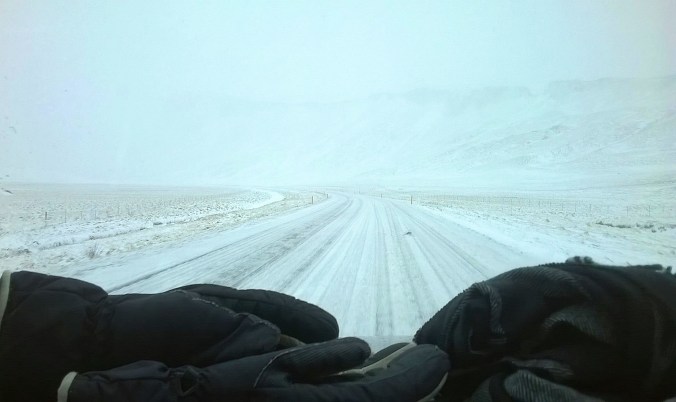
- Awakening the following day with huge snow flakes that enfold the city;
- I’m out of hard cash, as usual, and as usual I’m not allowed to pay by credit card, thus I gotta get to an atm: the Skoda Fabia I rented starts slipping on the snow and I almost hit a wall; I swear hard, as usual, and it takes me one hour to find an operating atm.
- Departure to Mostar.
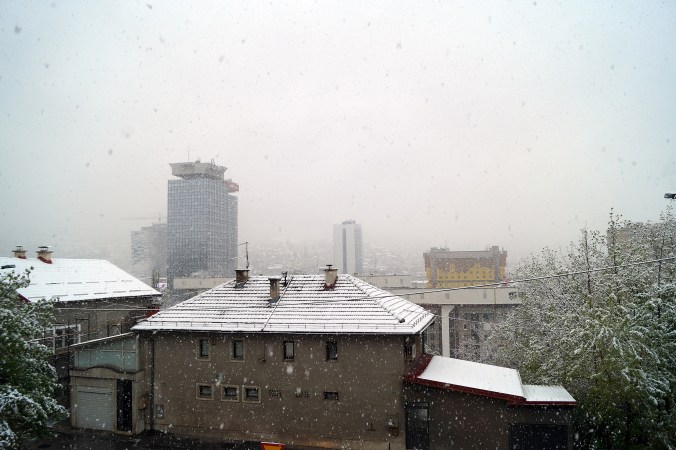
The road which takes from Sarajevo to Mostar is wonderful, and that morning maybe even more, thanks to bridges whitewashed by snow blankets that were walking on emerald green rivers, at the foot of smooth silhouettes barely resembling mountains; across galleries and villages lying asleep, in a scenery made by pastel colors and minarets standing out as eternal lookouts.
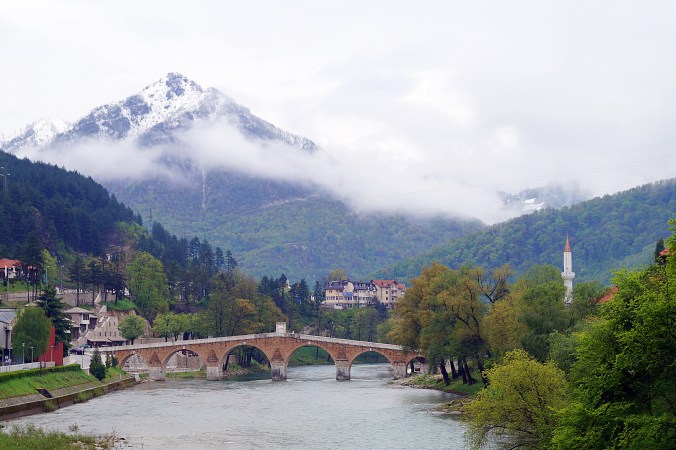
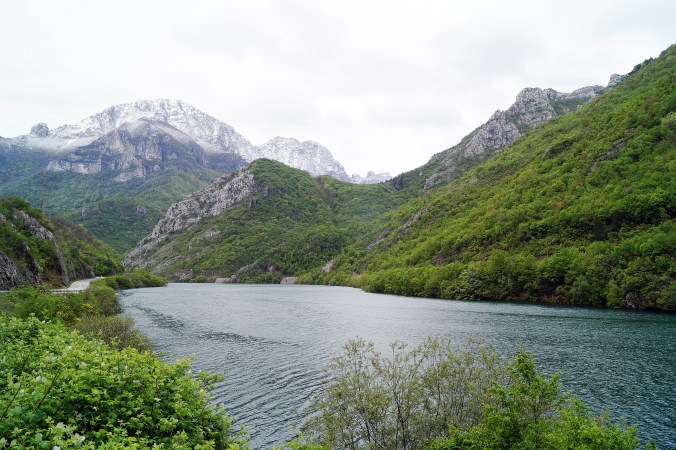
We ran along the Neretva, the beautiful turquoise river that springs upon Dinaric Alps and quite freezing flows until southern Dalmatia, whose banks were the setting of the driving out of the daring Axis Powers by Titus’ partisans.
Happy as a child, whenever I had the opportunity I stood still, in order to smell the atmosphere and to immortalize the image, so much enthusiastic that if someday I had to make this route again I would do it on foot, to fully enjoy the experience.
Mostar was covered by a total grey, yet we found it amazingly charming. Founded by the Ottomans in the XV century, it came into the limelight during the ninety’s Yugoslav wars, as the Croatian troops, fighting against the Bosnian to seize the control of the city, blew the old stone bridge up. Later on, the bridge was accurately rebuilt and nowadays in its humpback connects the two banks of the river, and in summertime it gives place to a magical diving competition.
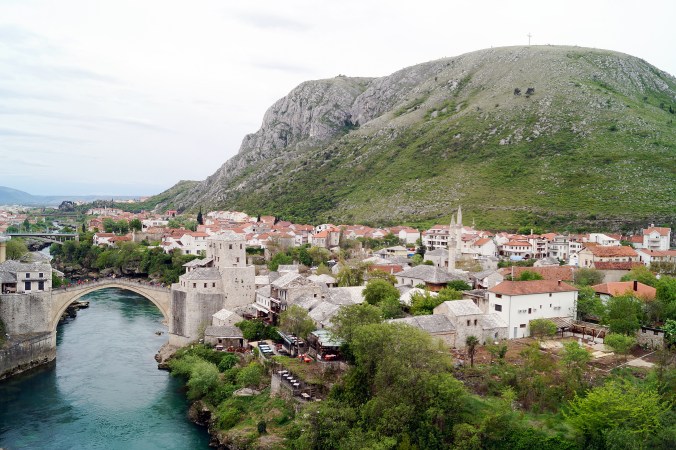
We walked on and on and at some point I caught a glimpse of a cross on the top of a hill. I started asking around what was it about: some ignored my question, others answered annoyed as if to say “nothing special”; till the moment in which we found a guy who gave us an explanation. It is a symbolic monument, he said, a big cross built by the Croatian, as a challenge, years after the end of the conflict with the Bosnian. A kind of warning. From that hill, which is called Mount Hum, the Croatian militias shot mortars on Mostar, that down here, crossed by the greenish waters of the Neretva, was floundering about.
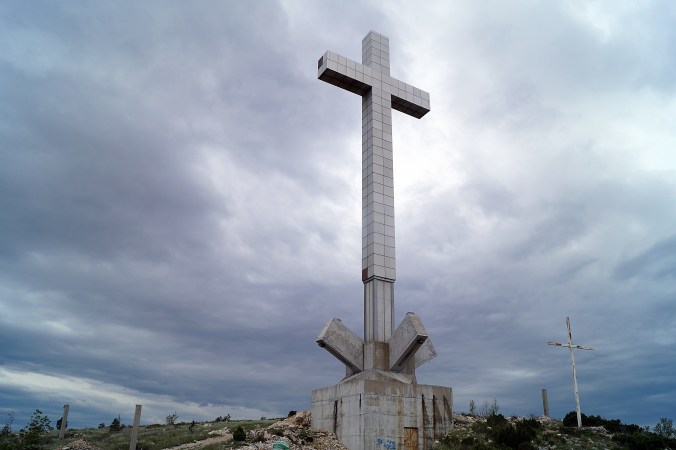
Then he volunteered to take us up there, by his car; alone it is dangerous, he said, and on foot it would take a long time. A couple of minutes and we decided to go.
We got on a wrecked car in company with him and a friend of his, both toothless and fun; we were climbing up Mount Hum, at a slow pace, among hairpin turns and unforgiving dirt road; the car took slaps by the wind and the engine wheezed. Grass around the road was stippled by yellow and red warnings about the presence of antipersonnel mines still unexploded.
The driver said that someone, a bit afar, was observing us while climbing up: that mount was under tight surveillance.
See this hole in my head?, said, pointing at a stitched up wound where hair grow no more, and this other in my shoulder?, the Croatian made it.
Once, I remember, he went on, Izetbegovic told us to run, to go up the mount to kill the Croatian who did not stop to bomb us. But after we indeed had killed them all, from the headquarters they called us again and said the mission was canceled, because they signed the peace agreements.
He carried on cursing at his chiefs, and at war, and at all to this day he still drags with himself.
We made it to the summit, at the foot of the cross, and before letting us get off the car to enjoy that weird overview – a mount injected by some thunderous wind’s grim blasts, and speckled by yellow and red cautions, as a memento of a near past – he added:
This is Bosnia-Erzegovina, guys. Here we’re all mad.
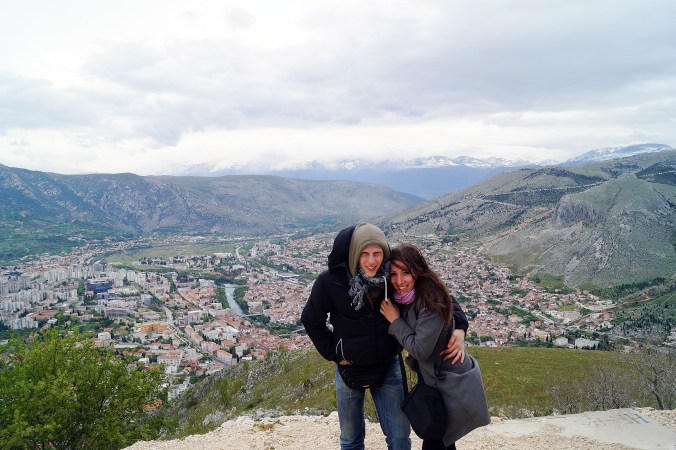
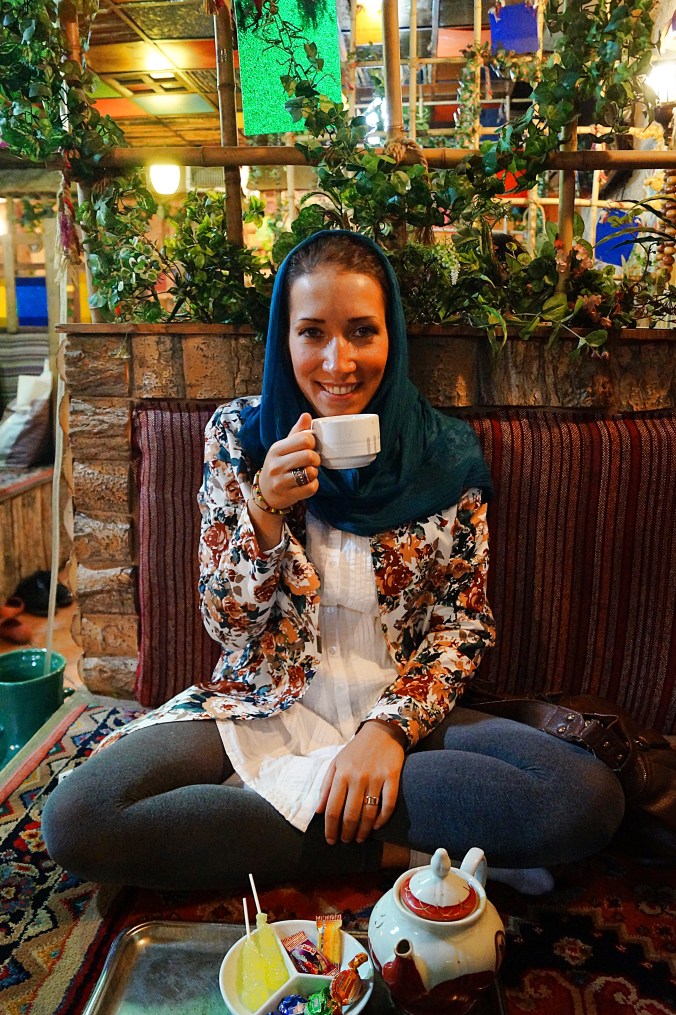
 Ciarlei and me.